




For decades, the beauty industry’s approach to anti-aging has relied on a simple, albeit flawed, logic: wait for the wrinkles to appear, and then try to erase them. But the era of reactive skincare is ending.
Driven by advanced facial data analysis and smartphone image processing, the market is undergoing a fundamental shift. We are moving away from generic, post-damage repair and entering the age of predictive, hyper-personalized prevention. And the biggest predictor of how your skin will age isn't just your age or lifestyle—it is your bone structure.
The Structural Divide: Face Type A vs. Face Type B

Researchers have begun classifying faces based on specific structural markers, primarily focusing on the root, bridge, and wings of the nose. By identifying slight shadow variations in these areas, we can predict internal skin characteristics long before surface-level problems physically manifest.
The data reveal a stark contrast between two primary structural profiles:
-
Face Type A: Characterized by a lower nasal bridge and larger nasal wings. Data correlates this structure with a generally smoother, more resilient skin texture over time.
-
Face Type B: Characterized by a higher nasal bridge and a deeper nasal root. This profile exhibits significantly higher capillary density scores, making it inherently more prone to developing early dynamic lines and static wrinkles.
If you possess a Type B facial structure, your high capillary density means you are physically predisposed to earlier wrinkling. Waiting for those lines to show up is simply too late.
Here is how to shift your routine from reactive correction to predictive prevention.
3 Pillars of Predictive Skincare for High-Density Profiles
If your bone structure dictates an accelerated aging timeline, your skincare strategy requires targeted, proactive interventions.
1. Early Dermal Thickening (The Retinoid Shift)
Because Type B structures are inherently prone to premature structural collapse, the traditional advice of starting anti-aging in your 30s is obsolete.
-
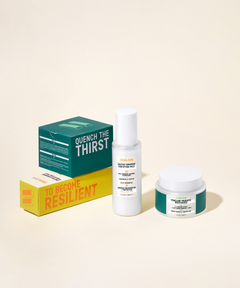
The Strategy: Introduce low-percentage, encapsulated retinoids or bakuchiol in your early-to-mid 20s. Pair these with collagen-signaling peptides. The goal is to forcefully maintain dermal thickness and elasticity before the biological slowdown even begins. PHA serum, like the Oat Milk PHA Serum, also helps to thicken the skin without disruption.
2. Proactive Vascular Management
High capillary density equals a higher risk of micro-inflammation. Over time, this invisible inflammation silently degrades your collagen reserves.
-
The Strategy: Pivot away from overly aggressive exfoliants (like harsh physical scrubs or high-percentage daily acids) that trigger redness. Instead, incorporate barrier-fortifying, vaso-calming ingredients like Niacinamide, Centella Asiatica, and Vitamin K. Strengthening the vascular network prevents micro-inflammation from accelerating the aging process.
3. Topographical UV Defense
A high nasal bridge acts as a topographical peak, absorbing maximum UV radiation. Conversely, a deep nasal root creates shadow zones where sunscreen is frequently under-applied or missed entirely.
-
The Strategy: Standard application isn't enough for this facial architecture. Apply high-adherence mineral SPF specifically to your structural high points. Underneath your sunscreen, layer a potent Vitamin C (L-ascorbic acid) serum to neutralize the free radicals that directly damage those fragile, dense capillary networks.
The Anthropological Context: Structure and Ancestry
Anthropologically, these facial structures loosely correlate with geographic ancestry and evolutionary adaptation. While individual genetics always vary, the data reveals fascinating overlaps between bone structure and skin behavior:
-
The Type A Profile: Most predominantly found in populations of East Asian, Southeast Asian, and Sub-Saharan African descent. From a dermatological standpoint, skin associated with these ancestries typically features a thicker dermis, higher melanin content, and denser structural support. This combination makes Type A skin inherently more resistant to early wrinkle formation (though it often requires a stronger focus on managing hyperpigmentation).
-
The Type B Profile: Most common in populations of European (Caucasian), Middle Eastern, and certain South Asian descents. Skin associated with these demographics generally has a thinner dermis, less photoprotective melanin, and higher vascular visibility. When combined with the prominent bone structure of a high bridge and deep root, this demographic is significantly more prone to early structural aging.
The Future is Predictive
Understanding the anatomy of a wrinkle allows for a crucial evolution in how we care for our skin. We no longer have to guess what our faces will need in ten years. By looking at our unique structural markers today, we can curate a highly personalized, preventative routine that stops aging before it starts.
The question is no longer how to fix your wrinkles, but whether your skincare routine is smart enough to predict them.
Leave a comment