


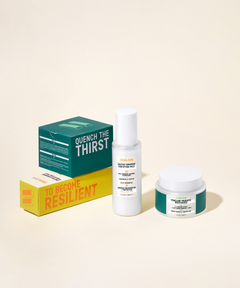


Why “More” Isn’t Always Better
When it comes to skincare, many people assume that higher percentages, more active ingredients, or extra steps automatically deliver better results. But the skin doesn’t work like a machine — it works in rhythms, limits, and thresholds. This is where the concept of marginal benefit becomes essential.
In simple terms, marginal benefit in skincare refers to the extra improvement you get when you add more of something — whether it’s a higher percentage of an ingredient or an extra step in your routine.
Sometimes that extra gives you a meaningful boost.
Other times… it barely moves the needle, or even makes things worse.
Let’s break it down.
What Is “Ingredient Marginal Benefit”?
Different skincare ingredients have different “sweet spots.” Increasing the concentration doesn’t always increase the results proportionally. Instead, most ingredients have a point of maximum return, after which benefits level off and side effects rise.
A classic example: Niacinamide.
Niacinamide: Why 5% = Enough
Most people think 10% niacinamide gives double the results of 5%.
But research — and real skin experience — says otherwise:
At 4–5%, you already get:
- Oil regulation
- Barrier strengthening
- Pore refinement
- A calmer, more even-looking complexion
Increasing to 10%:
- Only gives a small extra boost
- Raises the risk of:
- Redness
- Irritation
- Yellowing or dullness (oxidation issues)
Low marginal benefit, higher skin “cost.”
For most people, 5% is enough to achieve stable brightening and barrier repair.
What Is “Skincare Marginal Benefit”?
This refers to the actual extra benefit you get from adding one more product or step to your routine.
Think of it like this:
- Adding sunscreen to a basic routine → Huge benefit
- Adding your first brightening serum → Solid boost
- Adding a third brightening serum that does the same thing → Tiny marginal benefit
- A lot more money
- A lot more irritation risk
- Not a lot more results
Skincare has diminishing returns.
More layers ≠ more glow.
How This Applies to Common Ingredients
1. Niacinamide
- 5% already checks the major boxes
- 10%+ often tips into irritation
- Going higher does not mean “faster brightening”
- For daily, long-term use → lower concentrations have higher marginal benefit
2. Acids (AHA, PHA, LHA)
More acid ≠ faster progress.
Skin metabolism follows a natural rhythm.
Pushing it too hard disrupts the rhythm and causes:
- Sensitivity
- Dehydration
- Post-inflammatory pigmentation
Low concentrations, used consistently, allow your skin to move steadily forward without overwhelming it.
Steady > aggressive.
The highest marginal benefit usually comes from gentle, consistent exfoliation, not high percentages.
3. Ceramides
Ceramides are often misunderstood.
People focus on “How much ceramide does this cream have?”
But the real question is:
Can the formula help ceramides actually melt into and integrate with the skin barrier?
Because ceramides don’t work alone — their structure and delivery method matter just as much as their concentration.
- Lower concentrations
- With stable, well-structured formulations
…are often more effective and provide higher marginal benefit for barrier repair than “ceramide-bomb” products that don’t absorb well.
Takeaway: Skincare Is About Sweet Spots, Not Maximums
The idea that “more is better” leads to irritation, wasted money, and slower progress.
Understanding marginal benefit helps you build a routine that is:
- Effective
- Sustainable
- Skin-friendly
- Cost-efficient
The best results often come from:
- The right percentage,
- The right routine,
- And the right rhythm —
Not the most steps or the highest concentrations.
Final Thought
Smart skincare isn’t about stacking everything you can.
It’s about choosing what gives your skin the highest return with the lowest cost.
When you work with your skin — not against it — you achieve results that last.
Leave a comment